WhatsApp is eating your time. Here's what the math looks like.
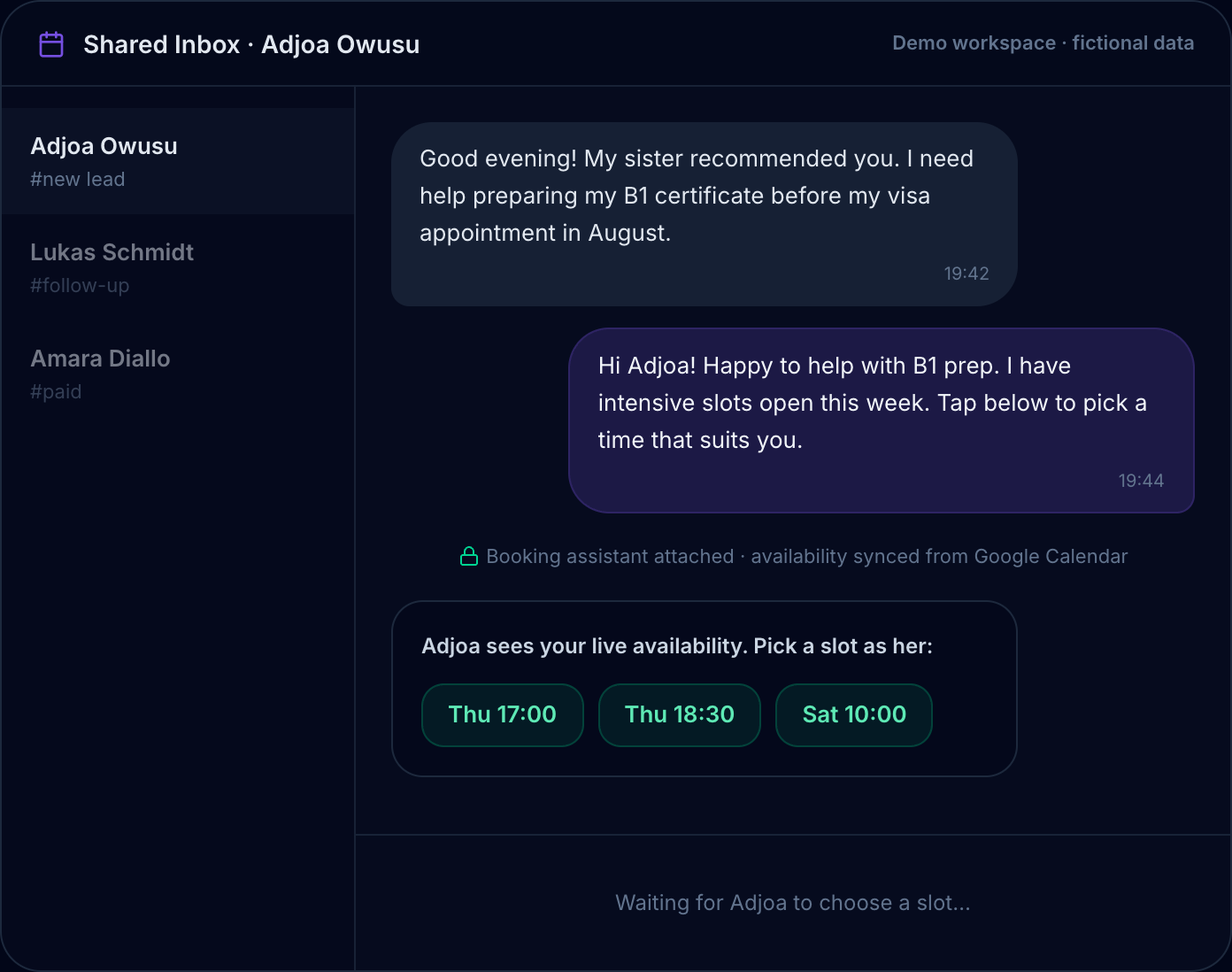
It is 8:47 in the morning. You open WhatsApp before you open anything else. There are 23 unread messages.
Eleven of them are from clients already in your programs — questions, updates, a voice note you will need three quiet minutes to actually listen to. You will handle those in the normal flow of work. But the other twelve are leads, strangers, or conversations you left open yesterday.
You start reading.
Hey, how much is your course?
Hi, I saw your reel — is the program still open?
What's included in the coaching package?
Do you have any spots left in September?
Four different people. The same four questions you answered last Tuesday. And the Tuesday before that.
You start typing. By 9:30, you have answered the price question four times, sent your booking link twice, explained your program to one person who still did not book, and chased a payment from a client who confirmed three days ago.
You have not done any actual work yet.
This is not a time management problem
Most advice on this topic tells you to batch your messages, set office hours, or put your phone on do-not-disturb. That advice treats the symptom. The problem is structural: you are manually doing things that do not require your judgment.
Answering "how much is your course?" for the fourteenth time is not a creative decision. It is a copy-paste. And if it is a copy-paste, it should not exist in your day.
Where the time actually goes
For creators and solopreneurs running client work through WhatsApp, repetitive communication reliably eats somewhere between 7 and 18 hours a week — before any billable work begins. How far up that range you land depends on how much of your inbox is repeat questions, and for most active creators repeat questions are the majority of it.
Here is where those hours go, specifically:
Answering the same four questions. Price, availability, what is included, how to book. If you have not automated these, you are answering them manually every single time. There is nothing personal about it — these are your FAQ, delivered one conversation at a time, by hand.
Chasing payments. An invoice sent three days ago with no reply. A client who said "I'll transfer tonight" and didn't. A deposit that arrived without a name attached. Each one requires a separate message, a separate mental note, and a follow-up if you do not hear back. None of it is difficult. All of it takes time you are not billing.
Following up on leads who went quiet. Someone asked good questions last week and then disappeared. You know you should follow up. You compose the message in your head. You delay because you are not sure whether to be warm or direct. By the time you send it, the window has passed.
Switching between tools to close a single client. The booking lives in one app. The payment confirmation is in Stripe. The conversation is in WhatsApp. The client's history is in a Google Sheet you update when you remember to. Moving one lead from "interested" to "paid and booked" means opening four separate apps, cross-referencing them manually, and then switching back to WhatsApp to confirm.
Why it compounds
None of these tasks feel like they take long in isolation. Two minutes to answer a price question. Five minutes to write a payment reminder. Three minutes to re-read a conversation before you know what to say. But they do not happen in clean, contained blocks. They happen throughout the day, every time you check your phone, in the gaps between real work — and the constant switching is its own cost, separate from the time each task takes.
Every one of those context switches pulls you out of whatever you were doing. That kind of interruption pattern is not compatible with deep work, with building a course, with filming the content that brought those leads to your DMs in the first place.
We built Chatydesk to fix this
Chatydesk is a WhatsApp CRM, booking system, and payment platform built specifically for creators and coaches who run their business through WhatsApp.
It does not add another tool to your stack. It replaces the fragmented one.
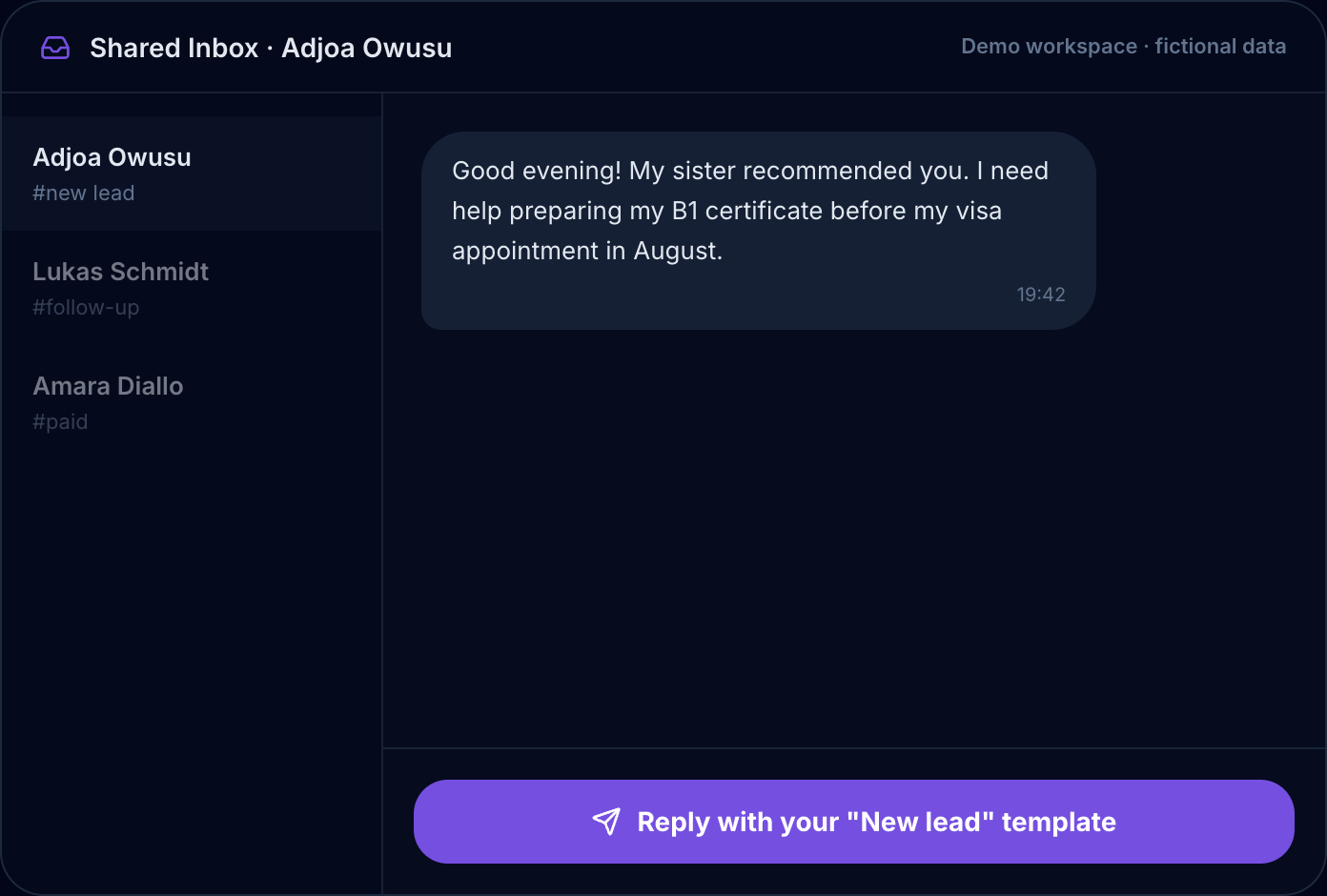
One inbox for every lead, booking, and payment — instead of four apps you cross-reference by hand. (Demo workspace with sample data.)
New enquiries get an automated first response. The price question, the availability question, the "what's included" question — these get answered automatically, immediately, with information you set once. The conversation is logged. You get notified when a real question comes in that actually needs you.
Booking happens inside WhatsApp. Not via a link that takes the client to another website. When a lead is ready to schedule, your open time slots appear as a tappable list inside the chat, they pick one from your live calendar, and a confirmation goes out automatically. No browser, no redirect, no three-day scheduling thread.
Payments are collected in the conversation. A Stripe checkout button goes out in the same thread. No invoice that sits in an email inbox, no separate payment link to hunt for, no chasing people who "forgot." The booking and the payment happen together, in WhatsApp, where the conversation already is.
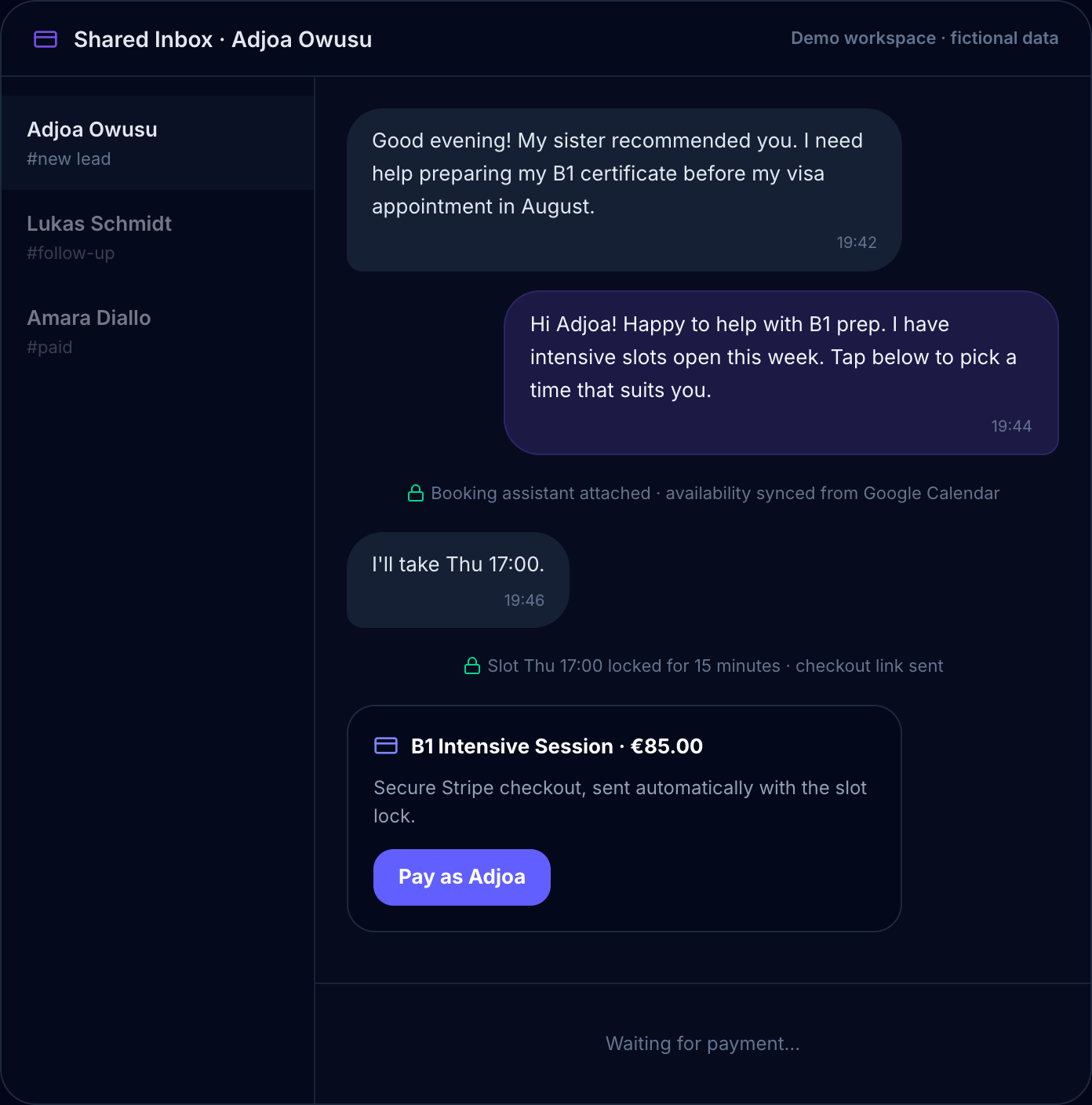
The slot locks and a Stripe checkout goes out automatically — booking and payment in one thread. (Demo workspace with sample data.)
Your client history is in one place. Every booking, every payment, every message — in a single Chatydesk inbox. You open one thing in the morning, not four.
The cost of the current setup, honestly
A standalone scheduling tool runs around $10 per seat per month. A chat-automation tool like ManyChat Pro runs $29 per month. That is roughly $39 per month for two tools that each handle one piece of what Chatydesk does end-to-end — and neither of them lives inside the WhatsApp conversation where the client actually is. Add payment processing on top, and the tool-juggling costs money and time at the same time.
Chatydesk is €39 per month for the full platform — CRM, in-chat booking, and payments in one place, self-managed, with your WhatsApp number and two team seats. No per-contact fees, and Chatydesk takes 0% of your customer payments. Two costs aren't ours to waive and we won't pretend otherwise: Meta charges for certain business-initiated WhatsApp messages, and Stripe applies its normal fee when you collect card payments. If you'd rather we handle the WhatsApp setup and go-live with you, or run the whole thing for you month to month, there are Launch and Managed tiers for that — the software is identical on all three, you just choose how much of the launch we do.
What changes when you stop doing this manually
The four questions still arrive. They just do not need you to answer them. The payment reminders still go out. You do not write them. The follow-ups still happen. You set the timing once.
What you get back is the time and attention you were burning on logistics — time that was supposed to go toward the work that built your audience in the first place.
The seven-day free trial includes full access to every feature. No credit card required.
Frequently asked questions
How much time does WhatsApp admin actually take for creators?
For creators running client work through WhatsApp, repetitive messaging commonly eats between 7 and 18 hours a week before any billable work begins — most of it repeat questions about price, availability, and how to book.
Can Chatydesk answer repeat questions automatically?
Yes. New enquiries get an automated first response that you set once, and you are notified when a message actually needs a human. The price, availability and what-is-included questions get handled without you typing them again.
Will automating WhatsApp get my number banned?
No. Chatydesk runs on the official WhatsApp Business Cloud API through Meta's hosted onboarding — not a grey-market bridge that risks a ban. Your number stays yours.
What does Chatydesk cost?
€39 per month for the full platform, self-managed, with your WhatsApp number and two team seats. Meta charges for certain business-initiated messages and Stripe applies its normal card fee — those are billed separately by them, not by Chatydesk.